
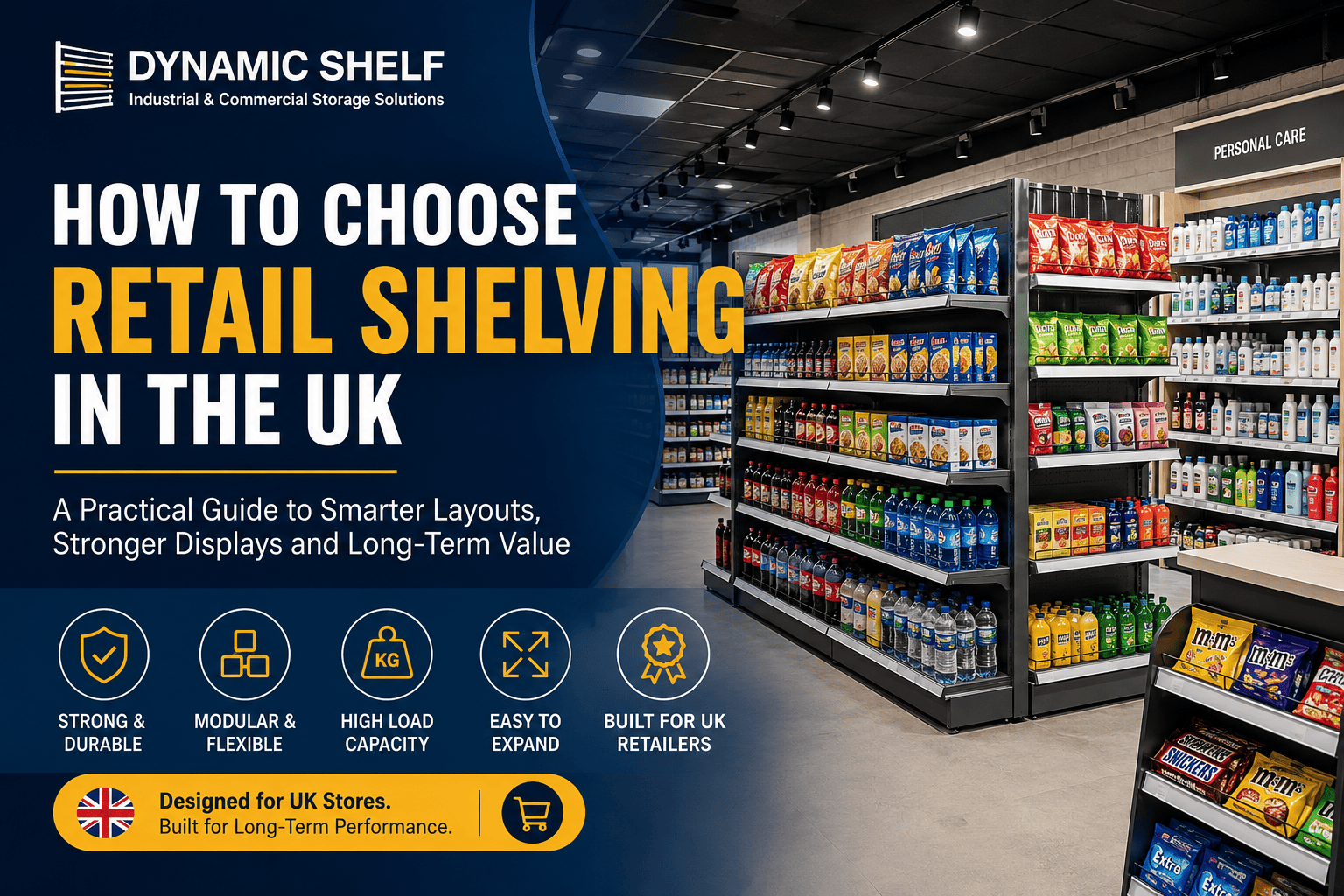
Retail shelving does far more than hold products. It influences how customers move through your store, what catches their attention, and how efficiently your team can restock and manage inventory.
Whether you are launching a new retail shop or upgrading an existing layout, choosing the right shelving system can improve both customer experience and day-to-day operations. The key is selecting shelving that works for your current needs while remaining flexible enough to grow with your business.
What to Consider Before Buying Retail Shelving
1. Understand Your Products and Weight Requirements
One of the most common mistakes retailers make is choosing shelving without properly assessing their stock.
Start by creating a simple product breakdown that includes:
- Your heaviest-selling products
- Bulk items such as drinks, tins, or hardware
- Products that need front-facing presentation, including cosmetics, snacks, or accessories
Once you know what you are displaying, choose shelving based on actual load requirements rather than estimated averages. Heavy-duty stock needs shelving designed for commercial use and long-term durability.
2. Plan Your Store in Zones
Successful retail layouts are usually designed around functional zones rather than random shelf placement.
Typical retail zones include:
- Perimeter zones for core product categories and regular purchases
- Aisle zones for browsing and product discovery using gondola shelving
- Checkout zones for impulse purchases and promotional items
This approach creates a smoother shopping experience and allows your shelving to support customer behaviour naturally.
3. Choose a System That Can Grow With You
Even if your shop is small today, your shelving should be able to adapt as your business expands.
Look for systems that offer:
- Modular shelving bays
- Adjustable shelf heights
- Matching fittings and accessories
- Easy reordering from the same supplier
A scalable system helps you avoid costly full replacements later.
Popular Types of Retail Shelving Used in the UK
Most retail stores use a combination of practical shelving systems depending on their product range and floor space.
1. Gondola Shelving for Retail Aisles
Gondola shelving is one of the most widely used shelving systems in UK retail stores. Its double-sided structure maximises display space while creating organised customer walkways.
It is commonly used in:
- Convenience stores
- Supermarkets
- Hardware shops
- Discount retail stores
Best for:
- Packaged goods
- Drinks
- Household products
- Grocery items
Benefits:
- Double-sided product display
- Adjustable shelving levels
- Strong weight capacity
- Easy expansion with additional bays
2. Wall Shelving and Wall Bays
Wall shelving systems are installed around the perimeter of the store to maximise vertical display space while keeping the floor area open.
They work particularly well in:
- Smaller retail stores
- Pharmacies
- Vape shops
- Specialist retail environments
Benefits:
- Makes efficient use of wall space
- Creates organised product sections
- Reduces visual clutter
3. Slatwall Display Systems
Slatwall panels and accessories provide flexible display solutions for hanging products and frequently changing stock.
These systems are ideal for products that benefit from a front-facing presentation.
Common uses:
- Phone accessories
- Vape products
- Hand tools
- Packaged accessories
Their flexibility allows retailers to rearrange hooks, shelves, and displays quickly as product ranges evolve.
4. Checkout and Impulse Display Units
Checkout displays are compact merchandising units placed near tills and payment areas to encourage additional purchases.
Even small impulse display setups can help increase average basket value without taking up much space.
Best for:
- Promotional products
- Add-on purchases
- High-margin accessories
- Seasonal offers
Retail Shelving Buying Checklist
Load Capacity and Durability
Before purchasing, ask the following:
- What is the maximum weight per shelf?
- What is the maximum weight per bay?
- Is the shelving suitable for daily commercial use?
- Is the finish resistant to scratches and wear?
If your store stocks heavy products such as beverages or hardware, strong load ratings are essential.
Modularity and Flexibility
Retail requirements change over time, so flexibility matters.
Check whether the system allows you to:
- Add extra bays later
- Install additional shelves easily
- Reconfigure layouts
- Reorder compatible parts in the future
Space and Operational Efficiency
A good shelving layout should support both customers and staff.
Think about:
- Restocking access
- Aisle width and movement
- Cleaning and maintenance
- Store flow during busy periods
Practical layouts improve efficiency and reduce operational frustration.
Supplier Reliability
In the UK retail market, reliable supply matters just as much as product quality.
Choose a supplier that can:
- Deliver consistently
- Provide replacement parts quickly
- Supply matching accessories
- Support future expansion
Reliable long-term availability prevents compatibility problems later.
Cost vs Long-Term Value
When comparing shelving quotes, do not focus only on upfront cost.
Also consider:
- Expected lifespan
- Maintenance requirements
- Expansion flexibility
- Downtime risks
- Replacement part availability
Cheaper shelving systems often become more expensive over time due to repairs, limitations, or replacement costs.
Common Retail Shelving Mistakes
Avoid these frequent problems:
- Buying shelving before properly measuring the store
- Ignoring shelf load ratings
- Using too many different shelving systems
- Overlooking checkout display opportunities
- Choosing suppliers with poor long-term stock availability
Choosing the Right Retail Shelving for Your Store
The right retail shelving system should do more than simply fill space. It should improve customer flow, support efficient operations, and adapt as your business grows.
Ask yourself:
- Is your current layout easy for customers to navigate?
- Can your shelving safely support your heaviest products?
- Will the system still work if your product range expands next year?
Investing in practical, modular retail shelving helps protect your store layout and supports long-term retail performance.